Fractures are one of the most common medical emergencies worldwide. According to the World Health Organization, more than 178 million people suffer fractures each year — from car accidents, falls, sports injuries, and bone-weakening diseases like osteoporosis.
For decades, treatment has largely depended on invasive surgery: metal plates, rods, screws, and bone cement. While effective, these methods come with long healing times, high costs, and risks of complications.
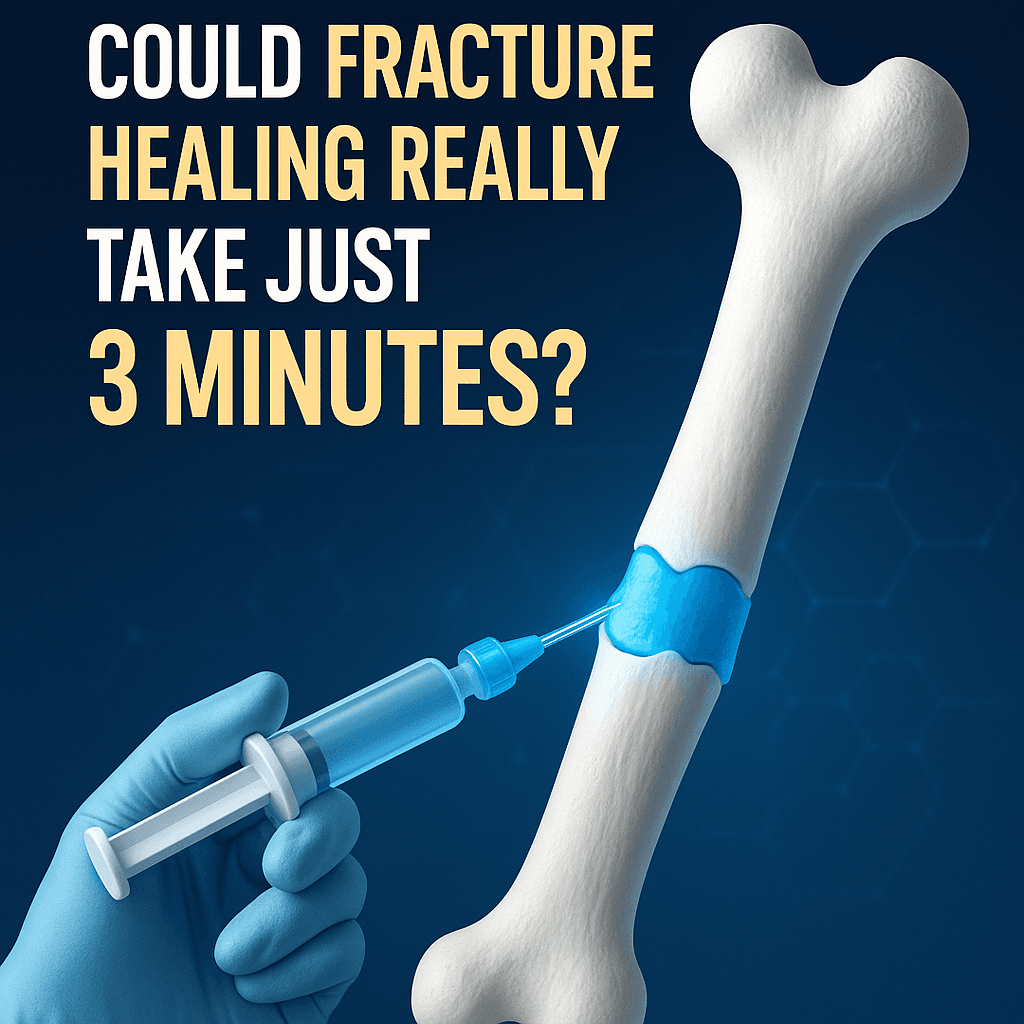
But now, Chinese scientists claim to have developed an oyster-inspired bone glue, officially called Bone-02 — that can repair fractured bones in just three minutes. Early trials suggest it could change trauma care, orthopedics, and even space medicine forever.
Let’s dive into what Bone-02 is, how it works, what the data really says, and where it could take us in the future.
Why This Discovery Matters Now
Fractures are not just a personal health issue — they are a global economic burden.
Elderly care crisis: Hip fractures are projected to triple by 2050 as populations age, leading to millions of deaths and disabilities each year.
Healthcare costs: In the U.S. alone, fracture care costs exceed $20 billion annually.
Military & emergency medicine: Trauma is the leading cause of death in conflict zones and disaster response.
Current treatments often require:
✅️1–3 hours of surgery
✅️Hospital stays averaging 7–14 days
✅️Months of rehabilitation
✅️Follow-up operations to remove implants
If Bone-02 truly allows bones to be stabilized in minutes, with no need for metal plates, the savings in time, cost, and human suffering could be extraordinary.
The Science Behind Bone-02
The key to Bone-02’s success lies in biomimicry. Researchers studied how oysters adhere to wet rocks in turbulent seawater — a process where natural proteins form ultra-strong, water-resistant bonds.
Using this inspiration, they engineered a bioadhesive polymer capable of:
Instant wet adhesion: Works in blood-rich environments where normal glues fail.
Rapid bonding: Stabilizes fractures in 2–3 minutes.
High strength: >400 pounds of bonding force, with shear strength of 0.5 MPa and compressive strength of 10 MPa.
Bioabsorption: Gradually dissolves as the natural bone heals, leaving no permanent foreign body.
In plain terms: Bone-02 acts like a biological scaffold that temporarily fuses broken bone fragments, giving the body time to regenerate naturally.
Bone-02 vs. Current Fracture Treatments
Treatment Method Pros Cons
Metal Plates & Screws Strong, reliable Requires invasive surgery, risk of infection, often needs second surgery to remove hardware
Bone Cement (PMMA) Quick stabilization Non-bioabsorbable, brittle, risk of thermal damage to tissue
External Fixation (frames/pins) Can be applied in emergencies Bulky, uncomfortable, infection risk
Bone-02 Adhesive Fast, less invasive, bioabsorbable, strong even in blood Still experimental, limited trial size, long-term effects unknown
If Bone-02 proves reliable in large-scale trials, it could replace metal plates in many cases, especially non-weight-bearing fractures, or complement existing surgical methods in complex cases.
Early Trials and Real-World Testing
Reports indicate Bone-02 has been tested in over 150 patients across Chinese hospitals.
Healing success rate: High, with no major adhesive failures reported.
Safety: No toxic side effects documented.
Speed: Bonding achieved in under 3 minutes per fracture site.
However, international experts remain cautious. Clinical trials in medicine typically require thousands of patients, across multiple countries, before global approval. Questions remain about:
Long-term durability — will it remain stable until complete healing?
Potential for overuse or misuse before proper regulations are in place.
Global Medical Impact
If proven effective, Bone-02 could reshape medicine on several levels:
Economic Benefits
Faster surgeries → reduced operating room time (average OR costs $60–$100 per minute).
Shorter hospital stays → lower insurance payouts.
Less need for follow-up surgeries → fewer healthcare resources consumed.
Patient Benefits
Reduced pain and complications.
Quicker rehabilitation.
Lower out-of-pocket costs.
Global Healthcare Inequality
Bone-02 could be a game-changer for low-resource settings, where access to advanced orthopedic surgery is limited. Imagine small clinics in Africa, Asia, or rural regions using bone glue kits instead of waiting for surgical specialists.
Scenarios And Future Possibilities
Here’s where Bone-02 could make the most impact:
1. Battlefield And Disaster Medicine
On-site fracture repair in minutes could save soldiers’ and disaster victims’ lives by stabilizing injuries before evacuation.
2. Elderly Hip Fractures
Hip fractures are deadly for seniors: up to 30% die within a year. A faster, less invasive option could dramatically improve survival rates.
3. Sports Medicine
Faster fracture stabilization = quicker recovery. Imagine elite athletes cutting months off their rehab.
4. Veterinary Medicine
Pet owners spend billions on fracture treatments. A bioadhesive could revolutionize animal surgery.
5. Space Exploration
In space, surgery is nearly impossible. A lightweight adhesive kit could allow astronauts to stabilize fractures during long missions to Mars.
Ethical, Regulatory & Safety Questions
Every medical breakthrough comes with challenges:
Approval: Will U.S. FDA, EU EMA, and WHO approve a Chinese-developed material?
Overuse: Could doctors apply bone glue where traditional surgery is still safer?
Military Edge: Could the PLA gain a trauma-care advantage on the battlefield?
Cost: Will it be affordable, or priced high as a premium biotech product?
Counterfeit Risks: Black-market versions could flood developing countries.
Who Stands to Gain?
China’s biotech sector → leadership in biomaterials and regenerative medicine.
Medical device companies → partnerships or competition (Zimmer Biomet, Johnson & Johnson, Medtronic).
Hospitals & insurers → cost savings from shorter recovery times.
Patients worldwide → quicker, safer healing options.
The Future of Smart Biomaterials
Bone-02 might be just the beginning. Researchers envision adhesives that:
Carry stem cells to accelerate regeneration.
Include nanotech sensors to monitor healing in real time.
Expand beyond bones — to repair cartilage, tendons, or even heart tissue.
We may be entering a new era where surgery becomes less about cutting and fixing, and more about gluing and regenerating.
FAQ (Frequently Asked Questions)
What is Bone-02 bone glue?
A Chinese-developed bioadhesive inspired by oysters, designed to rapidly repair fractures.
How fast can Bone-02 repair a fracture?
Reports suggest stabilization in 2–3 minutes.
Is Bone-02 bone glue safe?
Early trials in 150 patients show promising safety, but large-scale studies are still needed.
Will bone glue replace metal plates and screws?
Not immediately. It may replace or complement them in specific fracture types.
When will bone glue be available outside China?
That depends on international regulatory approval, which could take several years.
Final Thoughts
Bone-02 might sound like science fiction — “gluing bones together” — but it represents a genuine leap in biomaterials.
If it holds up under global scrutiny, it could reduce suffering for millions, save billions in healthcare costs, and reshape how we treat fractures in hospitals, war zones, and even space.
For now, it’s a promising breakthrough — and a glimpse of a future where fixing a broken bone might be as quick and simple as patching a crack in glass.
If you like this article, feel free to link back to our site. China’s Bone Glue Breakthrough: 3-Minute Fracture Repair